The Complete Palestinianization of American Feminism
A Lived History
Aug 17, 2026
Dear Readers:
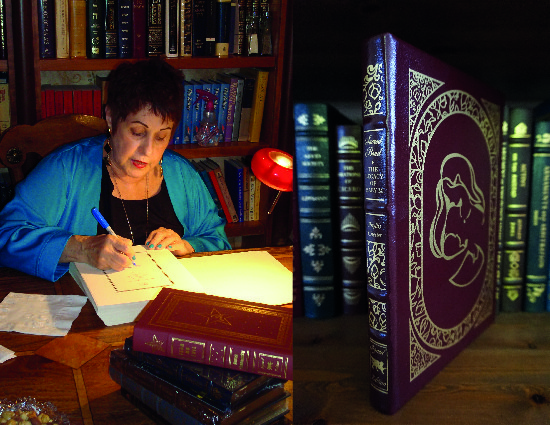
I am sharing the Introduction to my forthcoming book. Once again, I was compelled to write about this; I really did not want to do so. An author does not always freely “choose” her topics. Since I am one of the pioneers of Second-Wave feminism, I wanted to honor it and at the same time document that we were only human beings, imperfect, and that those who came after us were far more than imperfect—they betrayed the essence of women’s rights. I call them faux-feminists. They are the ones who wear hijab or niqab on campuses even as women in Afghanistan and Iran are murdered for failing to do so. They are also the ones who view “Palestine” as the most important feminist issue in the world. This is also true for Women’s Studies, Reproductive Rights, in the LGBTQ movement, the Goddess movement, the Christian Feminist Theologians, and for Feminist activism. I also charted the existence and rise of Antisemitism/anti-Zionism among Second-Wave feminists, including among some of our “icons,” from the early 1970s on, as well as in the media, and in international organizations long before it was on anyone’s radar.
Pretty crazy, yes? And yet it is so.
Here, have at it.
Introduction
The Second-Wave feminism that I once pioneered has been completely Palestinianized.
Sixty years ago, I did not foresee that feminists would so eagerly join the rest of the West in embracing an anti-Americanism that is toxic, heartless, mindless, and suicidal; that feminists would privilege barbarism over civilization; and that they would one day become such grim totalitarian thinkers, such cowardly herd animals, and so susceptible to pro-Islamist and anti-Zionist/antisemitic propaganda.
Contemporary American “feminism” is far more concerned with the alleged occupation of Palestine—a country that does not and has never existed—than it is with the occupation of women’s bodies, faces, and minds worldwide.
It is a postmodern, postcolonial, and intersectional "feminism" in which legitimate concerns about race and an anti-woman obsession with identity have replaced any focus on sex-based rights. It is a "feminism" that passionately condemns Christianity, Judaism, and only one nation-state—Israel—as dangerous to women’s rights but dares not critique religiously supremacist Islam for this same reason. This allegedly evolved version of “feminism” condemns only Western imperialism and colonialism and refuses to acknowledge the long history of Islamic imperialism, colonialism, anti-Black racism, and both gender and religious apartheid.
Women’s Studies associations and national feminist organizations are not merely “politically correct"; they have become “Islamically correct.” They are currently more concerned with the religious sanctity of head and face veiling than they are with forced face veiling and honor-based violence in Muslim countries and in Muslim communities in the West. In the name of anti-racism, not only have such faux feminists betrayed the Jews, but they have also abandoned tribal and immigrant women of color to barbaric misogyny. Above all, they have abandoned the most heroic ex-Muslim, Muslim, Christian, Sikh, and Hindu male and female dissidents everywhere.
Too many Western feminists have become total conformists. They are no longer independent or creative thinkers. Faux feminists have also been persuaded that Islam is a “race,” not an ideology or a religion; that America’s historically grievous enslavement of Black Africans and South Africa’s horrifying apartheid regime are exactly the same as alleged Israeli discrimination against Arab Palestinians, including against Jihadists with blood on their hands. American feminists are no longer independently inspired activists but only take to the streets in large swarms of Jihad-like bullies and usually on behalf of non-feminist issues.
For more than a half-century, American academics and so-called feminists have condemned American foreign and corporate policies and are now ready to die for America's sins; they are quite willing to sacrifice their own way of life, as well as the lives of others, for a presumably noble cause; they are ready to surrender the West to a cleansing, redeeming force—in the misguided belief that doing so will finally rid the entire world of its immense suffering.
They believe that only America has caused the world’s pain and only its destruction can cure it. They view themselves as barbarians who have forfeited the right to challenge any other group, culture, or religious ideology, no matter how dangerous or violent, lest they somehow “offend.”
Some of these American faux feminists actually believe that the humbling of America and the destruction of Israel will reduce the sorrows of all the world's victims. They hope it will also free them from the burden of Empire—a guilt they so unhappily bear—even if this also means that the whole planet might be bombed back to the seventh century.
Some of my former Second-Wave feminist allies and their contemporary faux-feminist descendants view Iran, Hamas, Hezbollah, the Houthis—even al-Qaeda and ISIS—as forces that are trying to level the playing field.
Totalitarian thinking is flourishing today among educated American elites. Thought-control is flying high under the banners of "free speech" and "political correctness." Dare to question this privileged lot's right to silence or shame those who are trying to expose or challenge them, and you'll quickly be attacked as representing a new and more dreadful form of McCarthyist "witch-hunting."
Of course, movements are bound to evolve, and a diversity of ideas is always welcome. Blind and righteous conformity to rank propaganda is not a genuine intellectual development. Communist thinking is not an evolution; it is, rather, a devolution. It's been tried and, in human hands, has failed; the human costs are beyond acceptable. An exaggerated concern for one's own body and for one's own sexual identity in no way addresses faux feminists’ presumably larger concerns about poverty, racism, climate change, and justice for the oppressed.
*****
Just as the Jewish pioneers once drained the malaria-infested swamps in the Holy Land, so too am I rooting out the swamps teeming with ancient Blood Libels and Big Lies that have penetrated and dominated every conceivable feminist space in America and, for that matter, in the entire Western world. Even I, who have been writing about this for decades, am overwhelmed by how much it is proving a Sisyphus-like task, or as my colleague Richard Landes has said, how much it's like cleaning out the Augean Stables, a filth-ridden cattle enclosure that Hercules purged in a single day.[i]
I am no Hercules. None of us is. But although the task is a mighty one, as Albert Camus understood, there is still valor and purpose in the perpetual attempt to do so.
Centuries of Christian and Islamic Jew-hatred as well as more than one hundred years of Soviet-era anti-Zionist/antisemitic propaganda, especially as propagated and even legalized by the United Nations, preceded all that was to follow. American organizations, left-wing philanthropists, and billions—perhaps even trillions—in Arab oil money solidified this new kind of "education." Many Second-Wave feminist icons as well as their followers drank the proverbial Kool-Aid.
To my horror, most American faux feminists are among those who remained silent after 10/7. Unbelievably, they believe that wearing hijab and niqab (a face mask) is a statement of anti-racism or an act of heroic "resistance."
It was not always like this.
Once, there was a moment in time, when a veritable multitude of American Sleeping Beauties awakened and saw themselves and each other in a totally new way. That moment has passed, but I still remember it with wonder and affection. Radical feminist ideas and activism were a bit like taking LSD. So many women became high at the same time. Suddenly, the world became psychedelically clear, and all the Lost Girls found themselves and each other.
The world had not seen anything like us—at least not since the nineteenth- and early-twentieth-century suffragists, both in England and in America. We'd never seen anything like us. We—who only yesterday had been second- and third-class citizens—had, all at once, and all too briefly, become players in history.
I am writing this book as a Second-Wave pioneer, and I am doing so in order to remind both the anti-feminists and the faux feminists who we were and for what we once fought. I am writing this book for the coming generations and for the sake of the historical record.
Who were we?
Second-Wave pioneers emerged between 1963 and 1973, and we took ideas very seriously. Some of us were geniuses. Many of us were dangerously intelligent, and most of us were radical thinkers. We did not all think alike. We were champion hairsplitters and disagreed with each other with searing passion. In our midst was the usual assortment of scoundrels, bullies, con artists, liars, and incompetents—not to mention high-functioning psychopaths, manic depressives, and suicide artists.
However, I am not a "wokester." I will not write any of them out of history or censor their works.
Without a feminist movement, I would have had a career but not necessarily a calling. I still would have written my books, but they would have had much smaller audiences and far less impact.
Despite everything, despite anything, I wouldn’t have missed this revolution—not for love or money. I remain forever grateful for that moment in time, that collective awakening that set me, at least partly, free from my former life as a "girl."
Turning to women for the first time in my life to discuss my—and their—most important ideas was psychologically and intellectually revolutionary. For many of us rebellious and ambitious daughters, the wounds of maternal disapproval were temporarily healed.
However, we knew nothing—absolutely nothing—about our American and European feminist foremothers and forefathers, even less about non-Western feminists. Few of us knew that we had feminist ancestors who had battled for women’s rights and for minority rights in the Western world in the eighteenth, nineteenth, and twentieth centuries. Before us, feminists had opposed sex slavery, wage slavery, marriage, automatic male custody of children, organized religion, and the absence of women’s legal, economic, educational, and political rights. Their writings were brilliant and fiery—but unknown to each successive generation.
In 1982, nearly twenty years after Betty Friedan's enormously influential work, The Feminine Mystique,[ii] had appeared, the divine Australian feminist scholar Dale Spender published Women of Ideas and What Men Have Done to Them, in which she documented how the most remarkable feminist work had always been systematically disappeared again and again.[iii]
Every generation of feminists had to reinvent the wheel. Mine certainly did. We called ourselves "sisters" and "daughters," and we had no mothers, no heroic female models or mentors. We were, if anything, matricidal. With some exceptions, we also rejected the lives our own mothers had led.
Within ten to fifteen years, with a few exceptions, books by the best minds of my feminist generation were already out of print. Within fifteen years, university professors and their students were largely unfamiliar with most of our work. They took for granted—or regarded as hopelessly old-fashioned—the grueling lawsuits we had brought, our brave activism, and our most radical analyses, if indeed they even knew what we had done at all.
In our own lifetimes, we became like our suffragist grandmothers and shared their dusty, forgotten fate.
But I remember us as we were, and how we will always be: politically, intellectually, and sexually vivid, vivacious, incredibly vibrant.
Here's what we did.
First, we formed a civil rights organization for women: The National Organization for Women (NOW), co-founded by two Black women—Aileen Hernandez[iv] and Pauli Murray, who was a quietly “out” lesbian[v] —and by a Jewish woman: Betty Friedan. NOW launched and won incredible class-action lawsuits. It demanded women's employment and banking rights, access to public accommodations, and, in general, demonstrated against women’s legal, reproductive, political, and economic inequality. This work led to women's entrance into formerly male-only jobs.
We picketed, marched, protested, sat in, and famously took over offices and buildings; helped women obtain illegal abortions; joined consciousness-raising groups; learned about orgasms; condemned incest, rape, sexual harassment, and domestic violence; organized speak-outs, crisis hotlines, and shelters for battered women; some feminists came out as lesbians.
Finally, we implemented feminist ideas within our professions and began a process of transformation that, in some areas, continues to this day.
These were the three mighty tributaries of the second wave. I swam in all three torrents.
And yet.
Only now, looking back, do I remember how much of the early years of second-wave feminism was also painful.
I had such an idealized view of feminism that when I began to encounter incomprehensibly vicious behavior among feminists, I was stunned, blindsided. I had expected so much of other feminists—far too much, perhaps we all did—that when we failed to meet our own high standards, many of us felt betrayed.
And then, when we were really betrayed—slandered, shunned by everyone we knew, our ideas stolen, our authorship denied, our history revised—we had no name for what was happening. Eventually, we called this “trashing," and it drove away many good feminists.
Individual petty jealousies and leaderless group bullying were frightening and ugly. “Mean girls” envied and destroyed excellence and talent. Feminists who had presumably left the 1960s Left brought with them its tactics of intimidation and interrogation. Many lesbians were supremacists who demanded primacy in terms of victimhood.
Some feminists did sound the alarm about what came to be called "trashing." In 1970, the actress, journalist, and future film director Anselma Dell’Olio addressed this in an unpublished and incandescent manuscript that she titled her “Swan Song to the Women’s Movement.” In 1972, I quoted Anselma and discussed this subject in Women and Madness.[vi]
In 1972, and again in 1976, Jo Freeman (Joreen) discussed this phenomenon in two important articles in Ms. Magazine: “The Tyranny of Structurelessness” and “Trashing: The Dark Side of Sisterhood.[vii]"
Mere words didn’t lead to a feminist reevaluation of sisterhood. Few feminists wanted to look at how they treated other women. And fewer still wanted to consider the possibility that the movement was not both “breast and womb.”
However, Paradise is always followed by the Fall.
For example: My good friend and colleague, the late great psychologist Naomi Weisstein, told me that within three years of its formation, the Chicago Women’s Liberation Rock Band had turned on her in pretty much all the familiar feminist ways. Naomi had written many of their songs and was also a genius at stand-up comedy at their performances. The Chicago Women’s Liberation Union, which she had helped found in 1969, had already trashed her as a “star” and demanded that she surrender her speaking engagements to less eloquent speakers. Band members followed suit, and, fraught with envy and untold hidden agendas, they brought about the end of the Chicago Women’s Liberation Rock Band in 1973.[viii]
As has been said: First, our movement ate its leaders; then, they turned on each other.
None of this stopped me, but it took its toll. After twenty years of research, I finally published a book titled Woman's Inhumanity to Woman (2002). Nothing to see here. Feminists behaved just like women behaved towards each other: competitively, aggressively, and with cruelty—a female version of Man's Inhumanity to Man.
My greatest comfort and strength came from doing the work itself—and from knowing that my work touched, changed, and even saved women’s lives.
But I also never stopped trying. Twenty years later, I convened a panel at the annual meeting of the National Women’s Studies Association at Spelman College. The panel’s title was “Horizontal Hostility among Women: Race, Class and Gender Issues,” and it nearly tore the roof off the place. Because my invitee and co-panelist, author bell hooks,[ix] and I publicly agreed on so incendiary a subject, some audience members—many of whom were African American women—accused the much-younger hooks of being my “mammy.” But mainly the audience wanted to tell their own stories of woman-on-woman betrayal and heartbreak. When we were finally forced to leave the auditorium, I sat outside on the lawn for a very long time listening to them speak.
Once, I also presented my views on psychological matricide and sororicide at a national conference of feminist therapists. Therapists had difficulty acknowledging that women could also be sexists. One African American therapist insisted that this was a “white girl’s problem”; one lesbian therapist insisted that this was a “straight girl’s problem”; one heterosexual therapist said that she hadn’t known that “women even had ‘a’ mother goddess or that we had killed her.” She urgently wanted to know "the" goddess’s name.
This book will share my own encounters with anti-Zionism/antisemitism among other feminist "icons"—long before our descendants became Palestinianized. However, I do not stop with my own experiences.
Sighing mightily as I girded my loins for this book, I also researched the American Women's Studies movement; the Reproductive Rights movement; the LGBT and Queer movement; the Wiccan/Mother Goddess movement; the Christian feminist liberation theology movements; and the Feminist Activism, Media, and Organization movements. This research includes many contemporary interviews as well as much reading; it was considerably painful and enraging but also enlightening.
Look: I'm not asking for much. (Just joking.) But as the demonstrators chant: "What do I want? And when do I want it?" For starters: I want feminist intellectuals, academics, activists, and organizational leaders to learn how to shun propaganda and peer pressure. I want them to write only about subjects in which they are truly expert and to write clearly and think independently. I want them to quit being Jew haters and anti-Zionists. I want them to stop sacrificing the women and dissidents of Islam in order to bring about the destruction of the West.
As I was writing this introduction, a lesbian feminist who is in her late eighties posted a rant on social media. Her name does not matter. There are thousands more like her:
The US and Israel are bombing the hell out of Iran, killing Iranian people and destroying sacred historical heritage sites while caskets containing young American soldiers who died for the cause are carried across our TV screens without an honor guard and all we hear is the success of the mission while the price of gas goes up and the stock market goes down and the worn out tired earth continues to die and whatever happens after is unknown; and yet, our country right or wrong is no longer the place where dark skinned immigrants could once flee to because we now have concentration camps and deportation of such much needed immigrants who do the dirty work; and all this while pregnant migrant teens are kept in a place in South Texas to keep them safe from abortions. Have I gotten these things right, or is it my fevered imagination run wild?
As of this writing, I've not yet seen a parade of Vietnam War-era-like young American soldiers in caskets being carried across our screens without an honor guard post-Iran, have you? I’m not saying that this cannot happen…
However, the only feminist issue she mentions—abortion—appears towards the end of her post, and the only pregnant women she is concerned about are the "migrant teens." She seems to have no knowledge that Iran has been murdering and torture-murdering Americans for the last 47 years; she knows or cares nothing about Iran's barbaric persecution and murder of its own people, including feminist and gay dissidents. Climate change and immigration now pass as burning feminist issues, not sexual violence towards women and children, woman-battering, or even female poverty.
This book was very hard for me to write. The amount and intensity of anti-Zionism and antisemitism among my former allies and friends, the Palestinianization among my so-called descendants, the faux feminists—made me feel tainted by choosing to handle so much toxic material.
However, real feminist work has continued on throughout the 21st century.
Contemporary real feminism differs from our Second-Wave grand illusions and historically lucky momentum, but, in a way, it has also built upon many of our ideas. Real twenty-first century feminism is a bit more balkanized in terms of a feminist focus on one ethnicity, one race, one issue only, but it is also more international in nature. It is not Palestinianized work; the focus is not on the overriding importance of Palestine.
This is a very personal book. I lived everything about which I write: it either happened to me, or I was an eyewitness to the incident, or I spoke to the woman immediately afterwards. I also lectured and published about it from the early 1970s on. In addition, I interviewed still-living Second-Wave feminists about their own experiences of antisemitism/anti-Zionism. As a "recovering academic," I was able to read a great deal of academic (and pseudo-academic) work that appeared both back in the day and throughout the 21st century.
The personal voice—or my lived experience—is my contribution to the historical record. This is exceptionally important since so many accounts of Second-Wave feminism, especially on the subjects of Israel, Judaism, anti-Zionist/antisemitism, Islam, and Palestine, have been wiped clean on the internet or radically transformed into believable lies. Some important feminists and events have been "disappeared"; credit for something that someone else really did has been neatly claimed. Of course, this kind of revisionism is also true in general—more so with the advent of social media and AI.
I hope that my personal voice will make it easier to trust my political conclusions and analyses. As they said in my generation: "The personal is political," and so it is.
If one lives long enough, one may also begin to hear the sound of a mighty pendulum beginning to swing.
For example: Early in 2026, a brave new group, Feminists Against Antisemitism, asked to interview me. They are primarily based in the UK, and even more significantly, most of the founders are Christians. Jews are among them. Their group arose in response to pro-Palestinian demonstrators and their attempted takeover of a feminist conference in Brighton, England.
I have waited for them for quite a long time. I am so glad they are now here. The late great poet Adrienne Rich, in her collection Snapshots of a Daughter in Law, speaks for me:
“Well,
she’s long about her coming, who must be
more merciless to herself than history.
her mind full to the wind, I see her plunge
breasted and glancing through the currents,
taking the light upon her
at least as beautiful as any boy
or helicopter,
poised, still coming,
her fine blades making the air wince
but her cargo
no promise then:
delivered
palpable
ours.”